
Subfloor & Foundation Repair in Melbourne's West
Stumps get the blame, but often the failure is above them — a bearer gone spongy at the end, or joists sagging where a subfloor has never been able to dry out.
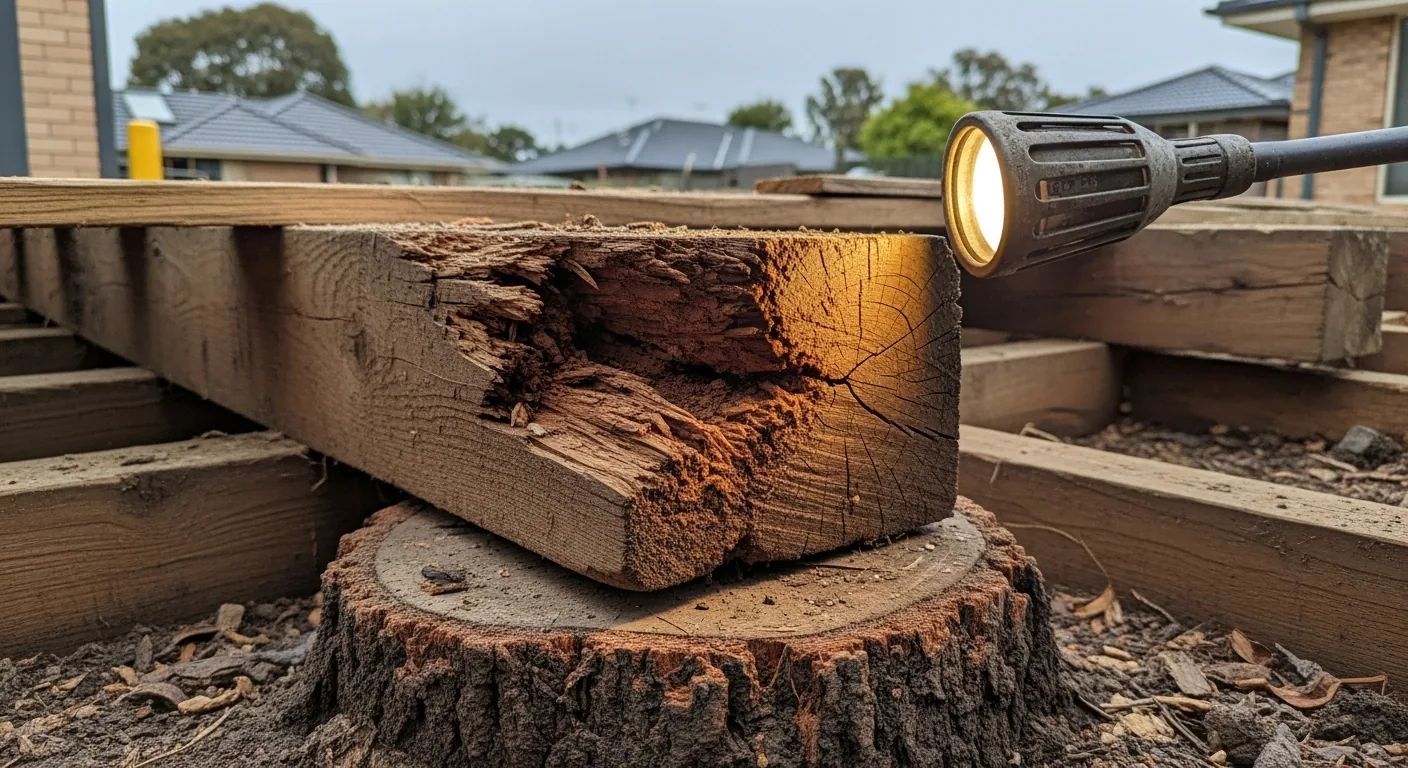
The stumps are only the bottom of the stack
A suspended timber floor is a stack: stumps carry bearers, bearers carry joists, joists carry the floorboards. Any layer can fail, and replacing stumps under rotted bearers fixes nothing.
What we find most often under houses in Melbourne's west:
Bearer ends gone soft where they sit on the stump — the point that stays wettest and dries slowest
Joists sagging or split, sometimes where a previous renovation cut one for a pipe or duct and never repaired it
Borer or termite damage in older hardwood, which is a different problem needing a different trade first
Bearers undersized or overspanned for the load, common where a wall was moved or a bathroom retiled in heavy stone
Poor subfloor ventilation, which is the underlying cause of a great deal of the above
Damp is the actual enemy
Timber under a house does not rot because it is old. It rots because it stays wet.
The recurring causes we see locally:
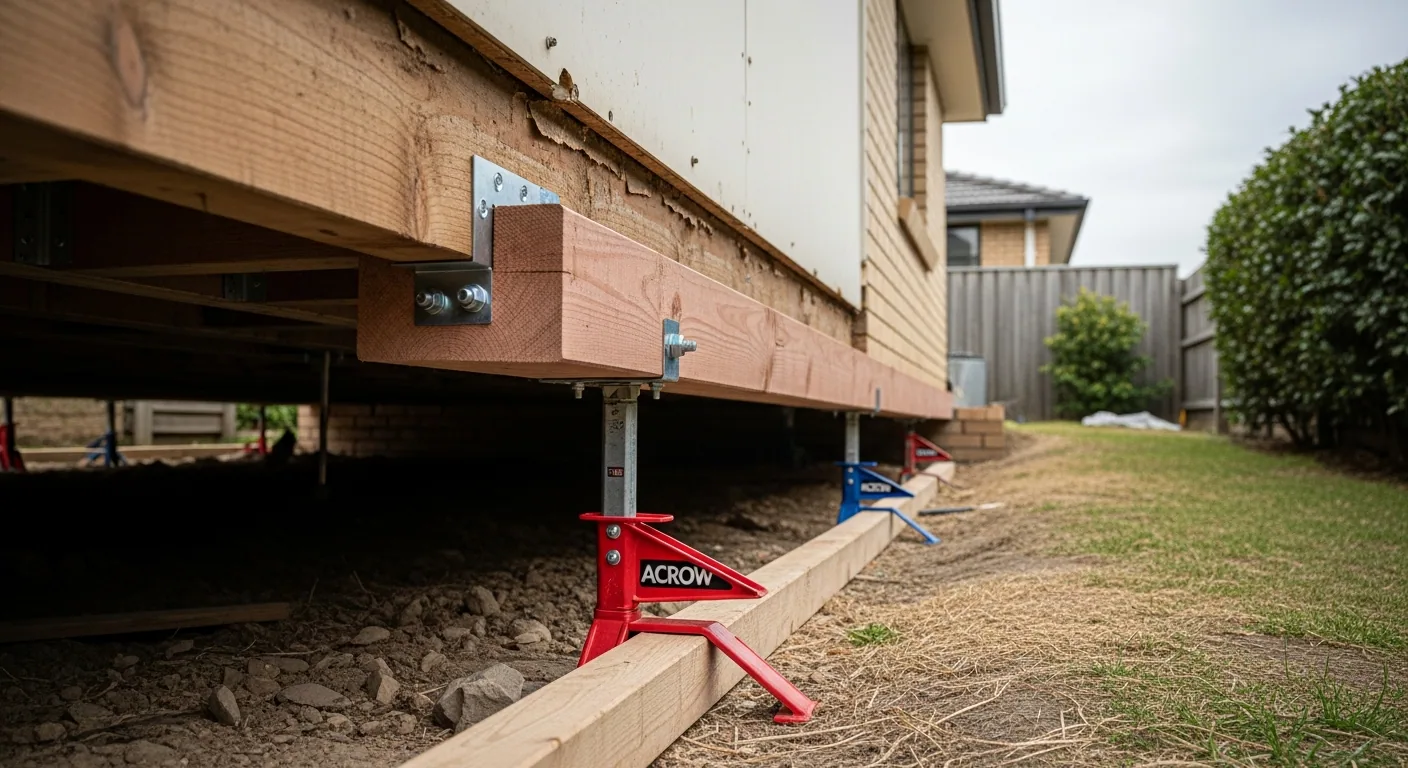
Blocked or too few subfloor vents. Vents get covered by garden beds, paving, extensions, decking or a rendered skirt. Air stops moving, moisture stays.
Ground higher outside than in. Years of added topsoil and mulch raise the ground until it sits above the subfloor, and water runs in.
Leaking plumbing — a slow supply or waste leak can keep an area saturated for years without ever being obvious inside.
Stormwater discharging under the house rather than into the drain, especially where a downpipe has come adrift.
Air conditioning condensate draining into the subfloor.
Repairing the timber without fixing the moisture is a temporary result at real expense. We look for the water source first, every time.
What repair involves
Depending on what has failed:
Bearer or joist replacement — the affected span is propped, the failed member cut out and replaced with correctly sized seasoned or treated timber
Sistering — a new member fixed alongside a cracked or sagging joist where full replacement is not warranted
Splicing — where only a bearer end has gone, the sound length can often be kept
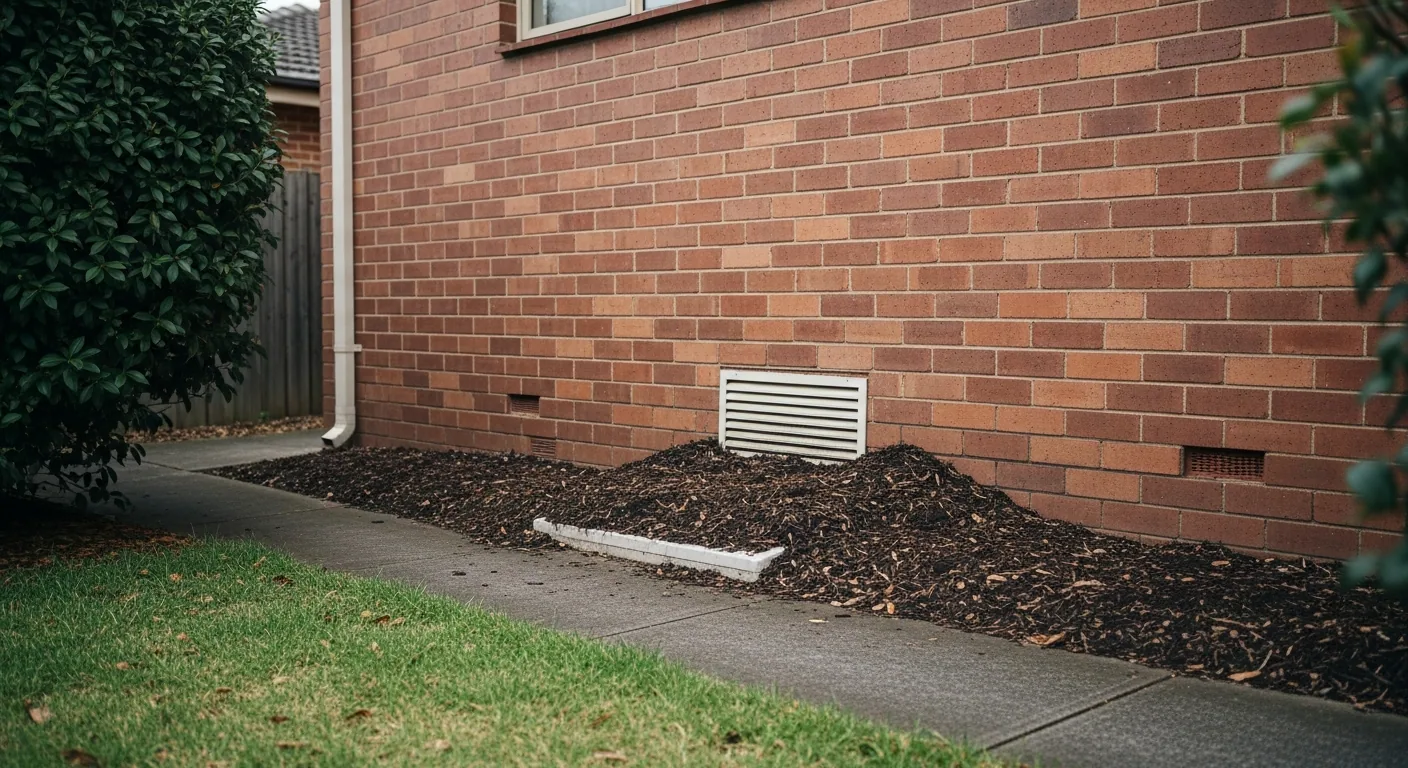
Ant capping and stump packing made good where it has been disturbed
Ventilation improved — additional vents cut, blocked vents cleared, ground levels lowered
Drainage corrected so the cause does not return
Where the subfloor is very tight, some of this has to be done from above with floorboards lifted. We will tell you at quote stage which applies, because it materially changes the price and the disruption.
Permits and who does the work
Structural subfloor work is building work under the Building Act 1993 and generally requires a building permit, issued through a private registered building surveyor. Victoria does not allow owner-builders to carry out this kind of subfloor work — it must be done by a registered builder. Statutory builder's insurance applies above $16,000.
Where we find active termites, that is a licensed pest management job before any carpentry starts. We will say so rather than build over it.
Timing
Localised repairs — a bearer end, a couple of joists — are commonly one to three days. Wider replacement across a whole subfloor runs longer, and where floorboards must come up, add time for lifting and relaying.
Ventilation and drainage corrections are usually done alongside, and are a small part of the cost relative to what they prevent.
Why choose us for subfloor & foundation repair
- Cause diagnosed first — vents, drainage or plumbing, not just the rot
- Bearers spliced and joists sistered where full replacement is not warranted
- Subfloor ventilation improved as part of the repair, not as an upsell
- Termite damage referred to licensed pest control before carpentry starts
- Registered builder and building permit as standard
Subfloor & Foundation Repair — common questions
How do I know if my subfloor timbers are rotting rather than the stumps?
From inside you often cannot tell — both produce the same bouncing floors and sticking doors. The difference shows under the house: rotted bearers are usually soft at the ends where they sit on stumps, and a screwdriver pushes into them easily. Sagging that is worst mid-span between stumps points at joists or bearers rather than stumps. A proper inspection checks the whole stack rather than assuming.
Why did my subfloor timbers rot in the first place?
Almost always because they stayed wet. The usual culprits are subfloor vents blocked by garden beds, paving, decking or an extension; ground level built up outside until it sits above the subfloor; a slow plumbing leak; or a stormwater downpipe discharging under the house. Timber under a well-ventilated, dry house lasts a very long time. Fixing the timber without fixing the water just resets the clock.
Can you repair just the damaged section or does it all have to come out?
Usually just the affected section. Where only a bearer end has gone, the sound length can often be kept and spliced. A cracked or sagging joist can frequently be sistered — a new member fixed alongside — rather than fully replaced. Full replacement is reserved for timbers that are structurally gone. It is worth asking any quote to be specific about which approach it has priced.
Do you have to lift my floorboards?
Only where subfloor clearance is too tight to work from underneath. Where there is room to get in and work, everything happens below and your floors are untouched. Where clearance is minimal — and plenty of older homes out here have very little — boards come up over the work area and go back down afterwards. It changes both cost and disruption, so we confirm which applies before quoting.
Will improving subfloor ventilation actually help?
Yes, and it is one of the cheapest things you can do. Moving air lets timber dry, and dry timber does not rot. Practical measures include clearing vents that have been covered by garden beds or paving, cutting additional vents, lowering ground levels against the house, and in some cases adding a subfloor fan. It is a small part of a repair cost relative to the damage it prevents.
What if you find termites while you are under there?
We stop and tell you, and it becomes a licensed pest management job before any carpentry proceeds. Repairing or replacing timber while a colony is active simply feeds it new material. Do not let anyone build over active termites. Once the infestation has been treated and cleared, the structural repair goes ahead normally.
Is subfloor repair covered by home insurance?
Generally not when the cause is gradual — rot from long-term damp, poor ventilation or age is typically excluded as wear and tear or a maintenance issue. Damage from a sudden, identifiable event such as a burst pipe is more likely to be considered, though policies differ significantly. Check your own product disclosure statement, and if a burst pipe is involved, photograph everything before work starts.
Do I need a building permit for subfloor repairs?
For structural work — replacing bearers or joists — generally yes. It is building work under the Building Act 1993 and the permit is issued through a private registered building surveyor. It is also not owner-builder work in Victoria; a registered builder must do it. Purely maintenance-level work like clearing blocked vents does not carry the same requirement. We will tell you which category your job sits in.
Ready to book subfloor & foundation repair?
Contact us today for your free, no-obligation quote.