
Bouncing & Uneven Floor Repair in Melbourne's West
A bouncing floor is a symptom, not a diagnosis. It can be stumps, bearers, joists or overspanned framing, and the fix for each is different — so the first job is finding out which.
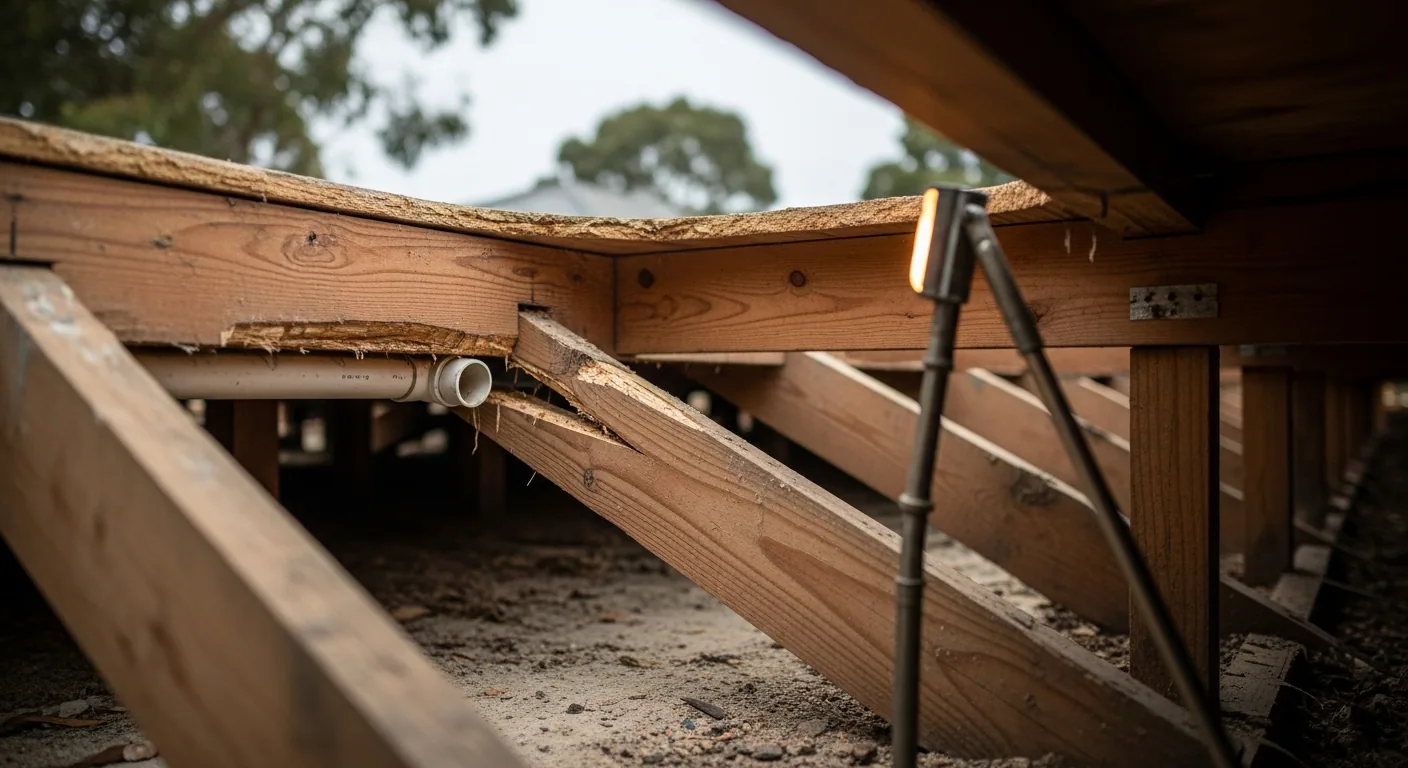
Bouncy, sloping and sagging are three different complaints
People use them interchangeably. Structurally they point in different directions, and telling them apart is most of the diagnosis.
Bouncy or springy — the floor deflects when you walk, and cups rattle. This is a stiffness problem, usually joists that are undersized, overspanned, cracked or notched. It is often worst mid-span, away from stumps.
Sloping — the floor is solid underfoot but not level. This is a support-height problem: stumps that have sunk or rotted, or footings that have moved. If it is only in one area, something localised has dropped.
Sagging — a dip or hollow through the middle of a room, solid but visibly curved. Usually bearers deflecting over too great a span, or a bearer that has softened at one end.
You can have more than one at once, which is why "the floor feels wrong" needs someone under the house rather than a phone quote.
What we find causing it
Failed stumps — rotted timber, or stumps that have sunk into reactive clay. Common in older Werribee housing.
Overspanned or undersized joists, frequently where a wall was removed in a past renovation and the load path changed without anyone recalculating it.
Notched or drilled joists — a plumber or sparky cut through one for a pipe or cable and the joist lost most of its strength.
Rotted or softened bearers, particularly at the stump bearing point.
Missing or loose blocking and bracing between joists, which lets them twist and the floor feel lively.
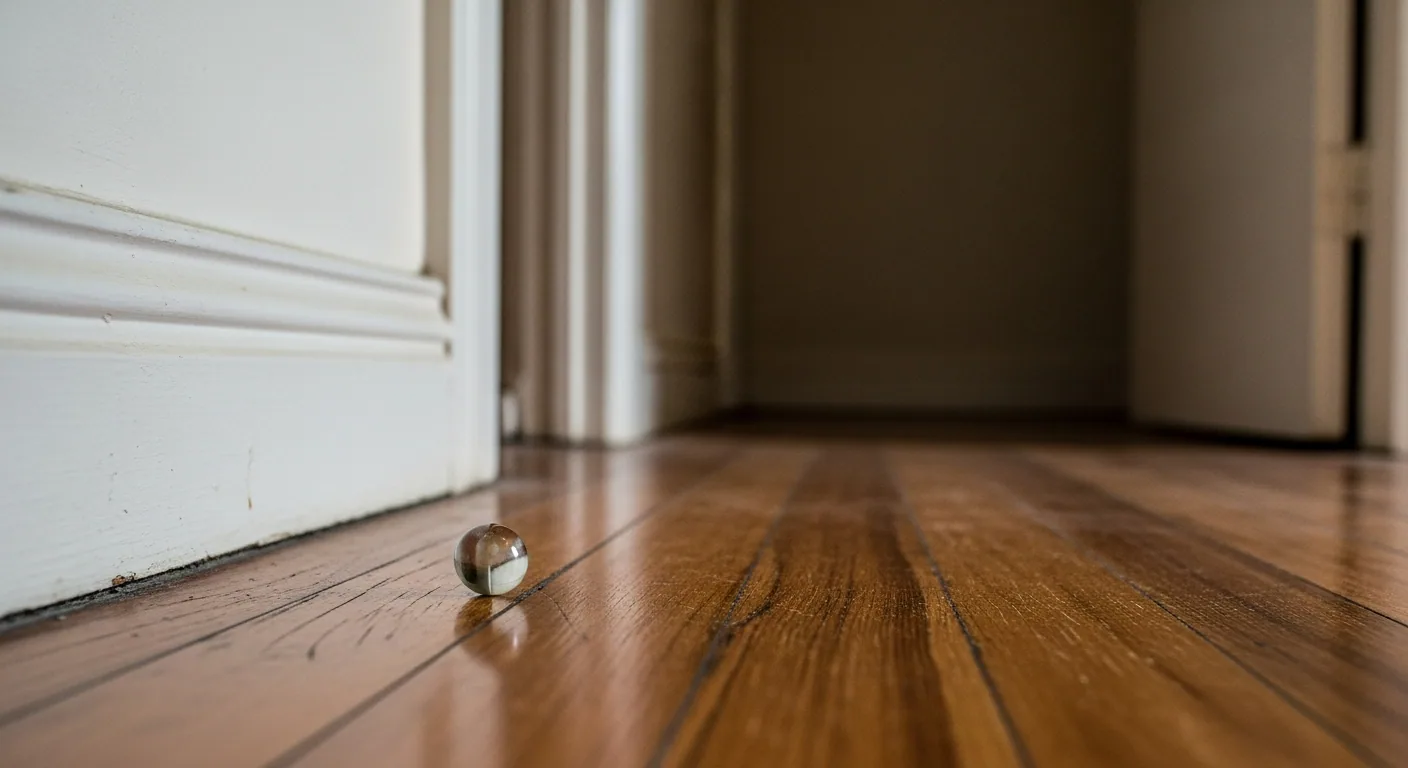
Loose floorboards or failed fixings, which is a much smaller job than everything above and worth ruling out first.
Heavy loads added — a stone benchtop, a large bath, a tiled bathroom — over framing never designed for the weight.
That last two matter commercially: sometimes a bouncing floor is a genuinely small fix. We would rather tell you that than sell you a restump.
Diagnosis before quoting
Floor levels measured across the whole footprint, not just the room you noticed
Under-house inspection of stumps, bearers, joists, blocking and fixings
Excavation beside stumps, because timber rots below ground and looks sound above it
Moisture and ventilation assessed, since damp is what destroys subfloor timber
Span and sizing checked against the load actually on the floor
Where movement is suspected of continuing, monitoring before committing to major work
What the fix looks like
Matched to the cause:
Stumps failed → restump or partially reblock the affected area
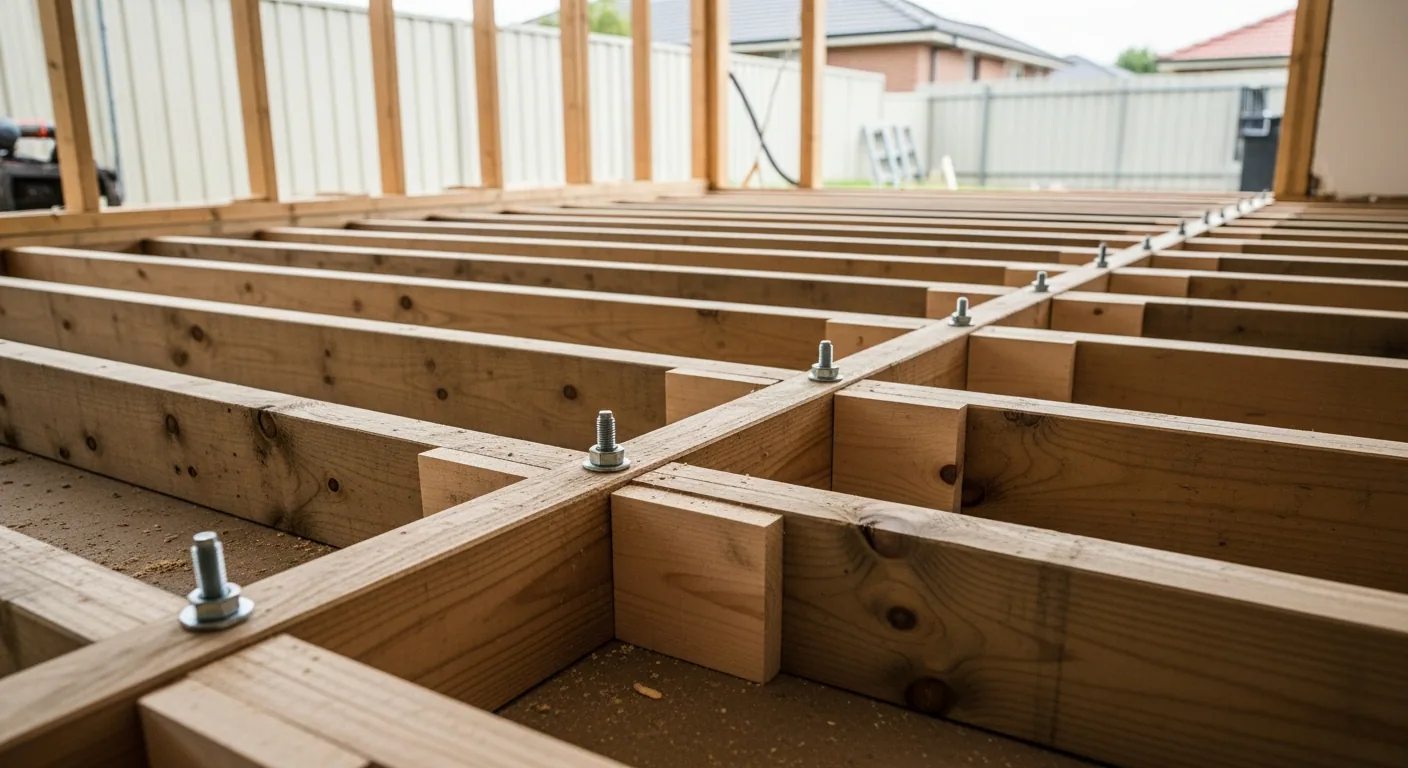
Joists overspanned or bouncy → sister new joists alongside, add mid-span bearers or additional stumps to shorten the span, install blocking
Joist notched or cut → reinforce or replace that member
Bearer softened or deflecting → splice or replace, and add support where the span is too great
Loose boards or fixings → refix, which is quick and cheap
Damp driving the decay → correct ventilation and drainage as part of the work
Adding stumps to shorten a span is often the neat answer for a bouncy floor, and much cheaper than replacing framing.
Cost, timing and permits
Small work — refixing boards, adding blocking, sistering a joist or two — is at the modest end and often done in a day or two. Structural work across a whole subfloor, or a full restump, scales up accordingly: a typical three-bedroom weatherboard restump generally runs $10,000 to $18,000.
Structural repairs are building work under the Building Act 1993 and generally need a building permit through a private registered building surveyor, and a registered builder to carry out — subfloor work of this kind is not open to owner-builders in Victoria. Statutory builder's insurance applies above $16,000. Minor maintenance like refixing loose boards does not carry the same requirement.
Where lifting is involved, expect the house to keep settling for one to two months afterwards, so leave any patching and repainting until it has stopped.
Why choose us for bouncing & uneven floor repair
- Diagnosis first — bouncy, sloping and sagging point at different causes
- Whole-floor level survey rather than a look at one room
- Small fixes identified as small fixes, not converted into restumps
- Added stumps to shorten spans where that beats replacing framing
- Damp and ventilation corrected so repaired timber stays sound
Bouncing & Uneven Floor Repair — common questions
Why is my floor bouncy in the middle of the room?
Bounce that is worst mid-span, away from the walls, usually points at joists rather than stumps — undersized, overspanned, cracked, or notched where a plumber or electrician cut one for a pipe or cable. Loose blocking between joists lets them twist and adds to the liveliness. Often the neatest fix is not replacing framing but adding stumps or a mid-span bearer to shorten the span.
Does a sloping floor always mean restumping?
No. Sloping means something supporting the floor has dropped, but that can be stumps, bearers or the footings themselves. In a timber-floored house it is often stumps. In a brick house there are no stumps, so it is a footings question and may point at underpinning. And where the stumps are structurally sound and the house has simply gone out of level, relevelling is far cheaper than replacement.
Will restumping fix my uneven floors?
It will if the stumps are what failed. If the real cause is rotted bearers, sagging joists or footing movement, new stumps under the same failed framing will not fix the feel of the floor and you will have spent the money for nothing. That is why the assessment looks at the whole stack — stumps, bearers, joists — rather than assuming the answer before getting under the house.
Could it just be loose floorboards?
Sometimes, yes, and it is always worth ruling out first because it is by far the cheapest outcome. Loose boards or failed fixings produce movement and noise underfoot without any structural problem at all. Similarly, missing blocking between joists can make a perfectly sound floor feel lively. A proper inspection checks these before anyone starts talking about restumping.
My floor started bouncing after we renovated. Why?
Two common reasons. Either a wall was removed and the load path changed without the framing being recalculated, so joists are now spanning further than they were designed to. Or heavy finishes were added — a stone benchtop, a large bath, a tiled bathroom floor — over framing never intended to carry that weight. Both are fixable, usually by adding support to shorten spans rather than replacing everything.
How much does it cost to fix a bouncing floor?
It depends entirely on the cause, and the spread is wide. Refixing loose boards, adding blocking or sistering a joist or two is modest work often done in a day or two. Structural repair across a whole subfloor costs considerably more, and a full restump of a typical three-bedroom weatherboard generally runs $10,000 to $18,000. Getting the diagnosis right is what stops you paying the top price for a bottom-price problem.
Do I need a permit to fix my floors?
For structural work — replacing stumps, bearers or joists — generally yes. It is building work under the Building Act 1993, the permit comes through a private registered building surveyor, and in Victoria a registered builder must do it rather than an owner-builder. Above $16,000 statutory builder's insurance applies too. Minor maintenance such as refixing loose boards does not carry the same requirement.
How long until the floor stops moving after the work?
Where jacking or lifting was involved, expect the house to settle gently for another one to two months. That is normal and expected rather than a sign something went wrong. It is also why cosmetic repairs should wait — patch plaster and repaint after that settling period, not the week the work finishes, or you will be doing it a second time.
Ready to book bouncing & uneven floor repair?
Contact us today for your free, no-obligation quote.